
- Mo/Tu/We/Th 9 AM - 5 PM
- Friday Emergency Only
- (650) 437-2042
- info@bayareavetmri.com
- San Mateo, CA
- 263 North Amphlett Boulevard
What Is Wobbler Syndrome?
Disc associated “wobbler syndrome” is a devastating disease of the cervical vertebrae and inter-vertebral discs resulting in cervical canal narrowing and spinal cord compression, which leads to a wobbly gait/walk in dogs and horses (hence the name wobbler syndrome). This condition is most commonly found in large breed dogs, in particularly, Dobermans. The underlying cause has not been completely determined yet but it seems to be a combination of disc degeneration (when the cushion between the vertebrae break down and no longer provide cushion for the vertebrae bones) and cervical spine instability.
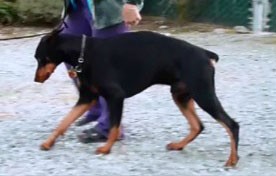
The best treatment for this condition is surgery; however the most common surgical procedures are invasive and associated with long post-operative recovery. In addition, they are not able to prevent the occurrence of the problem happening on another location of the spinal cord, this is called “domino lesion” and tends to occur in about 1/3 of the patients between 6 months and 2 years after surgery.
However, Cervical Disc Replacement, which is currently the best available option in humans with cervical disc diseases, is finally available for dogs with wobbler syndrome.


How the Adamo Spinal Disc™ different than traditional surgeries?
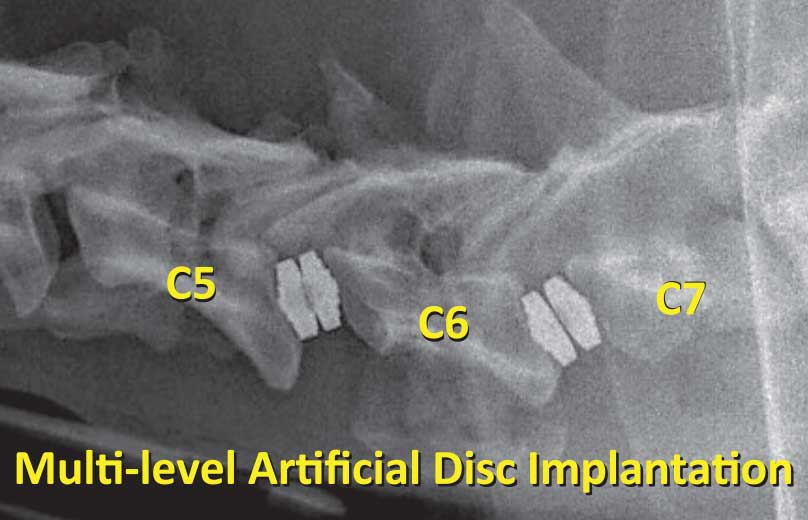
The new revolutionary treatment Dr. Adamo has designed and successfully completed in over 60 dogs within 5 years is the implantation of a metal artificial disc — this keeps the vertebrae bones from rubbing against each other. Not only does this technique cure Wobblers Syndrome and the pain/discomfort associated with it, but it also prevents the domino lesion side effect of other traditional surgical cures. In addition this technique is minimally invasive, carries minimal risks and the canine patient is able to be released from the hospital and go home the very next day after surgery.